There’s no other mainstream dating app that does what eHarmony does. No swiping, limited browsing, no endless scroll. You answer a detailed quiz, the algorithm filters by compatibility, and it delivers matches with enough shared data to actually start a real conversation. If you’re wondering if eHarmony is worth it, the answer depends on how you date and what you’re willing to commit to upfront.
The minimum Premium commitment is six months, with longer plans available at 12 and 24 months if you want a lower monthly rate. Basic membership gives you unlimited matches and the ability to send and receive Likes for free, but photos, full profiles, and unlimited messaging are locked behind Premium. This eHarmony review covers whether the product justifies that investment and whether eHarmony is worth it for your specific situation.
Some links in this article are affiliate links. If you sign up through them, we may earn a commission at no extra cost to you. This doesn’t affect our reviews.
How this eHarmony review works: We look at what actually happens when you use eHarmony today: how matching works, what paying changes, and whether the compatibility system delivers results or just generates numbers. For more on our process, see: How We Review Dating Apps (2026): What Actually Matters
Table of Contents
Is eHarmony Worth It For You?
eHarmony works when you’d rather have the app filter for compatibility than scroll through hundreds of profiles yourself. The minimum Premium commitment is six months, so it helps to know whether the quiz-based approach fits how you date before you pay.
You can sign up for free, take the compatibility quiz, browse your matches, and send Likes without paying. Photos, full profiles, and unlimited messaging unlock with Premium. It’s enough to get a feel for what’s there before you commit and decide if eHarmony is worth it.
What eHarmony Gets Right
The quiz changes the quality of the first conversation.
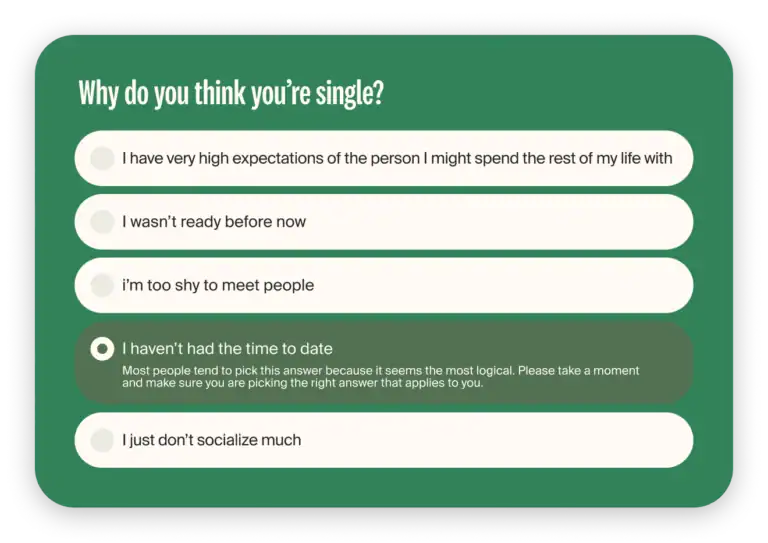
If you’ve been on apps where you get plenty of matches but nobody has anything to say, eHarmony feels different. The compatibility quiz runs around 80 questions and takes 20 to 40 minutes. It covers conflict resolution, lifestyle, values, religion, and daily routine. Because both people filled it out, you already know how your match handles disagreement, what their priorities are, and whether your lifestyles actually line up before anyone sends a message. That’s your opening conversation handed to you.
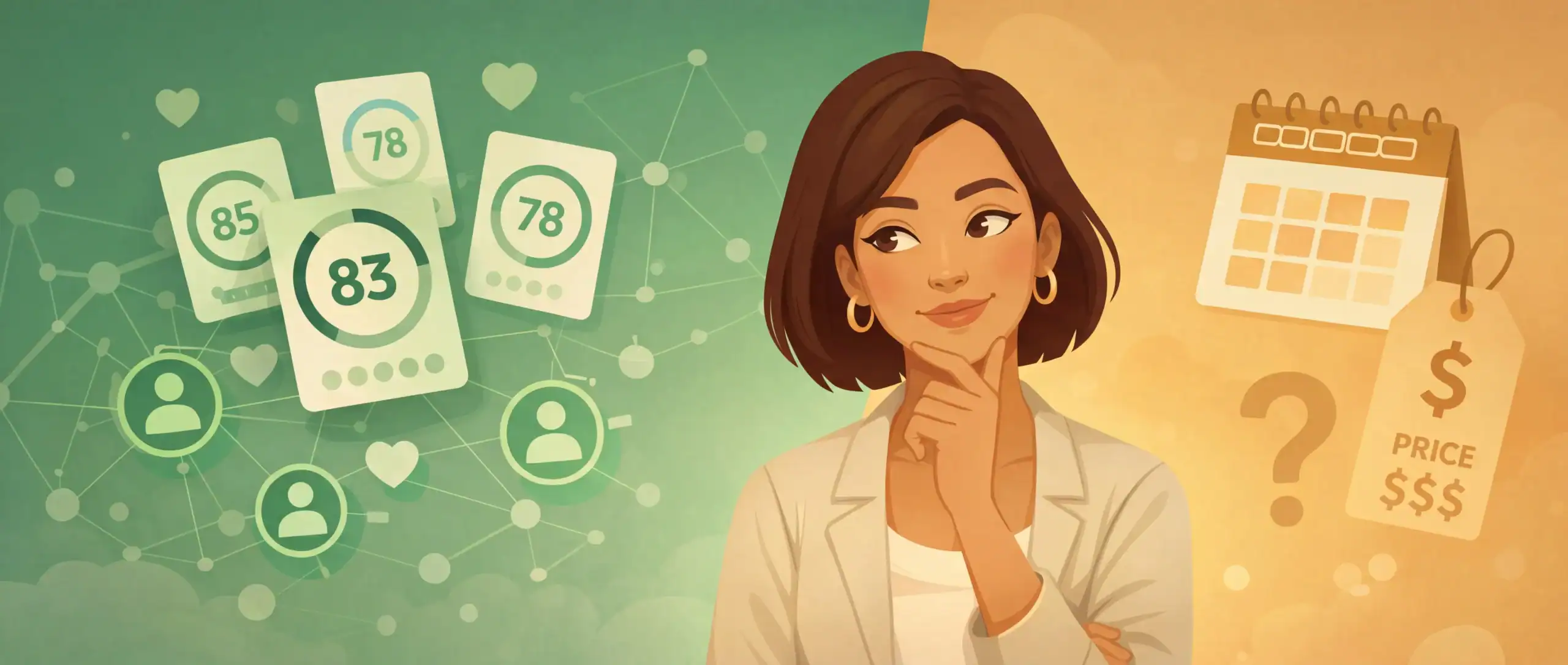
Every match comes with a compatibility score between 60 and 140, broken down by categories like emotional intimacy, conflict style, and communication. You see all of that before you say a word.
No swipe app gives you that much about a person before the first message.
No swipe feed means a different kind of attention.
eHarmony isn’t built around a swipe feed. There’s no infinite scroll. The system sends daily matches, and Premium includes enhanced search filters for additional discovery. It’s not zero browsing control, but the primary mode is match-led. If the algorithm isn’t surfacing people you want, your ability to go find them yourself is more limited than on apps like Match or OkCupid.
If swiping through hundreds of profiles every day burns you out, that’s exactly why this works. For people who’d rather have fewer, better matches handed to them, eHarmony is worth the trade-off.
Profile quality is noticeably higher.
The profile quality also tends to be higher than what you see on Hinge or Tinder. People who paid for a six-month commitment generally filled out their profiles. Activity indicators like login dates let you see who’s actually there versus who signed up months ago and disappeared.
Where eHarmony Breaks Down
Is eHarmony worth it? The same thing that makes eHarmony different is also where it frustrates people You’re relying on the algorithm to find your matches, and if it’s not showing you people you’d actually want to talk to, there’s not much you can do about it. Some early 2026 user reviews describe getting as few as 10 matches in a 50km radius after paying for a full year. When the app doesn’t have enough people to pull from, the algorithm can’t fix that.
You’re not browsing an open database. eHarmony decides what you see. If what it finds doesn’t match what you want, you can’t go searching on your own. You’ll know within the first few weeks whether there’s enough there to justify staying.
Fake profiles still show up. Trustpilot ratings sit around 3 stars as of early 2026, and a chunk of recent one-star reviews mention fake profiles, phishing attempts, and matches whose listed location doesn’t line up with where they actually are.
For context, eHarmony’s 3-star Trustpilot rating is actually the highest of any mainstream dating app. Hinge sits at 1.2, Tinder at 1.2, Bumble at 1.3, OkCupid at 1.2, and Match.com at 1.3. Dating apps in general get hammered on Trustpilot because the people who leave reviews are overwhelmingly the ones who didn’t find what they were looking for. Nobody finishes a great first date and thinks ‘I should go write a Trustpilot review.’ That doesn’t mean the complaints aren’t real, but it means a 3-star rating on Trustpilot for a dating app is closer to ‘decent’ than it looks.
The cancellation policy is strict. Turning off auto-renewal doesn’t get you out of the current term. If you’re paying in installments and want to leave after the first one, you still owe the rest. Some places have short cooling-off windows (New York gives you 3 business days to cancel dating service contracts).
What People Get Wrong About eHarmony
“The quiz guarantees good matches.” The quiz improves filtering, but it can’t manufacture a bigger local pool or make people reply. A score in the 120s means your answers overlapped on the questionnaire. It says nothing about chemistry.
“Paying means better matches.” Paying means access to the matches that already exist: their photos, their full profiles, the ability to message freely. It doesn’t change who those people are or whether they’re actively using the app. If you’re asking is eHarmony worth it because of Premium, the answer depends on your local dating pool, not the subscription.
“A high compatibility score means attraction.” It measures values and lifestyle alignment. Two people can score 135 and still have zero in-person chemistry. Use it as a conversation starter, not a verdict.
The Cost of eHarmony
What you actually pay:
Published rates in early 2026 put the 6-month plan at roughly $56 to $66 per month, with longer terms bringing that down. eHarmony runs frequent promos, sometimes 50% off for new signups, so the price at checkout can be significantly lower. If you see a discount when you sign up, that’s a limited-time offer tied to your session, not the rate you’ll renew at.
Pricing shown reflects published US rates as of early 2026. eHarmony uses dynamic pricing, so your checkout price may differ based on location, device, and whether you’re a new or returning user. Promotional discounts (sometimes up to 50% off) appear frequently for new signups.
Who eHarmony Works the Best For
Serious relationships:
This is what eHarmony was built for and it shows. The quiz removes people who won’t invest 40 minutes in the process. The subscription cost removes people who aren’t serious enough to spend real money. What’s left are people who actually showed up ready to date. You’re not sorting through profiles wondering if this person is even active or just swiping out of boredom. If you’re serious about finding a relationship, that’s why eHarmony is worth it.
Casual dating:
Wrong app. Someone looking for something short-term is paying for a six-month minimum to use a product that actively works against that goal at every step. Tinder has a much larger active user base and costs nothing to message on once matched.
Users over 40 or 50:
One of the better mainstream options for this age group. eHarmony skews older than Hinge or Bumble, the no-swipe format is easier to use without burning out, and knowing how someone answered 80 questions gives you a lot more to open with than a three-word prompt answer on a swipe app.”
eHarmony vs The Competition
Hinge is free to message on, has a bigger user base, and its Most Compatible feature uses similar compatibility logic. eHarmony goes deeper with the quiz data and attracts people willing to pay for something serious. If you’re not sure algorithm-based matching is for you, Hinge lets you test the idea without spending anything
If you’re deciding between eHarmony and Match specifically, the short version is: eHarmony does the filtering for you based on quiz data, Match lets you search and decide for yourself. eHarmony costs more but gives you compatibility info before you message. Match costs less but every conversation starts from scratch. We break it down in detail here.
Elite Singles targets a similar demographic but with a smaller user base. It skews more educated and professional, though fewer people means fewer options.”
If you’ve read this far and you’re still asking is eHarmony worth it, it probably means you’re between eHarmony and one of the apps above. The deciding factor is whether you want the app doing the filtering for you or whether you’d rather do it yourself.
Not sure eHarmony is the right call? Here’s how it stacks up in our ranked list of every major dating app.
When to Stop
Give it a week or two. If by that point you’re still asking is eHarmony worth it because the match stream is thin and not improving. Paying longer won’t fix it if there just aren’t enough people using the app.
Leave sooner if you’re getting likes and icebreakers but nothing is converting into actual back-and-forth. That pattern usually means the people expressing interest aren’t the people you want to talk to, and eHarmony gives you limited ways to go find different ones yourself.
Leave when the algorithm keeps showing you people you wouldn’t choose and isn’t correcting after several weeks. Something in your quiz responses and your actual preferences is misaligned, and more time doesn’t fix that.
The Bottom Line on eHarmony in 2026
After this eHarmony review, the short version is: it’s one of the few dating apps where paying actually changes the experience. The compatibility quiz gives you real information about someone before you message them, the people on it generally showed up to date seriously, and the profile depth is better than anything swipe-based.
If you’ve already tried the free apps and you’re tired of matching with people who have nothing to say, eHarmony is worth it.