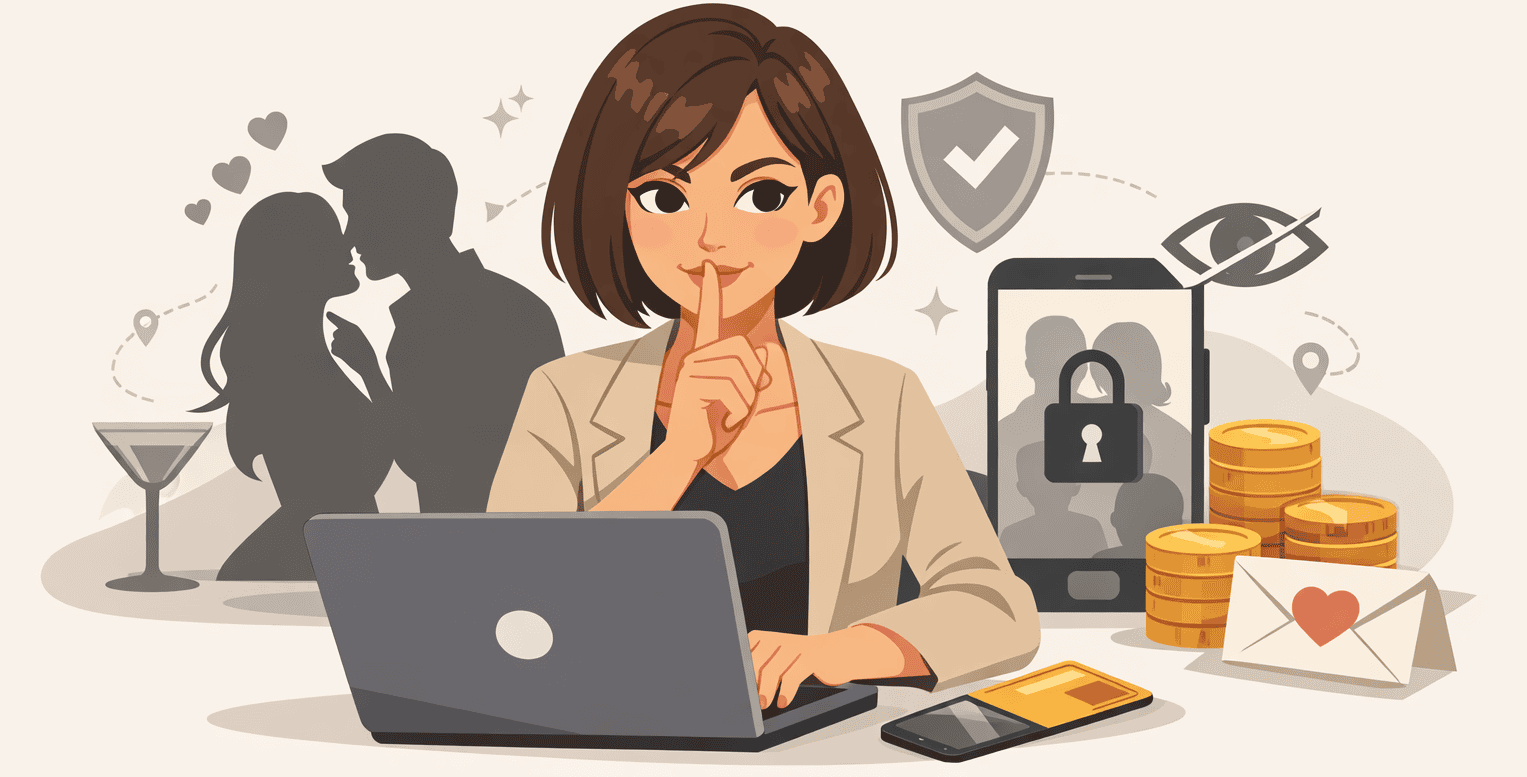
Ashley Madison launched in 2002 as a dating site for people in relationships looking to meet someone outside of them. The original tagline was blunt: “Life is short. Have an affair.” In February 2026, the company officially dropped the affair branding and repositioned as a “discreet dating” platform with a new tagline: “Where Desire Meets Discretion.”
According to the company’s own sign-up data, 57% of new members in 2025 identified as single. That shift matters for this Ashley Madison review because it changes who the platform is actually for. It’s no longer just an affair site. It’s a privacy-first dating app that attracts attached users, single users, separated people, and anyone exploring non-monogamy who wants their dating life to stay invisible.
What hasn’t changed is the credit system that makes it one of the most expensive dating platforms for men, and the 2015 data breach that still shadows every conversation about whether Ashley Madison is safe. This review covers what the experience looks like right now, what Ashley Madison credits actually cost when you do the math, and whether the privacy is worth the price.
Ashley Madison Quick Verdict: A Real Platform With a Steep Price Tag for Men
Ashley Madison works, but the experience depends almost entirely on whether you’re a man or a woman. Women can use the platform for free, which is a deliberate choice by Ashley Madison to keep women active on the site. Men pay for every interaction through a credit system that can drain a $59 to $79 credit pack in an afternoon of messaging.
The privacy features are genuinely better than anything on Tinder or Bumble, and the platform has rebuilt its security since the 2015 hack. But the cost structure means most men will spend more here than on any subscription-based app, and the platform’s optional automated outreach feature can blur the line between organic interest and system-generated messages.
✅ Best for
Women looking for discreet connections, the platform is completely free and the user base is active
Men who know exactly what they’re looking for and can screen fast before spending credits
People in non-monogamous arrangements who need privacy features no mainstream app offers
❌ Not for
Men on a tight budget who expect subscription-style unlimited messaging
People who need detailed profiles to decide whether someone is worth talking to
Anyone who wants to browse casually before committing money to a conversation
Why the Decision to Join Ashley Madison Is Heavier Than Most Apps
Ashley Madison is a discreet dating platform that runs on a credit system instead of a monthly subscription, and every message a man sends or reads costs money. That pricing model, combined with the platform’s history of a massive data breach in 2015, makes the decision to sign up heavier than on any mainstream app. You’re weighing privacy against cost, and trust against convenience.
The credit system means you don’t get a flat monthly rate to message as many people as you want. Every conversation has a price, and that price climbs fast. And unlike Hinge or Bumble where the worst outcome is wasted effort, Ashley Madison charges you at the exact moment you have the least certainty about whether the person on the other end is real, interested, or going to disappear.
What Ashley Madison Does Well
The privacy features are the strongest selling point and they’re legitimate. During sign-up, the platform prompts you to add a “disguised photo,” which blurs or masks your image while saving the original in a private gallery you control. You choose who gets access to the unblurred version through a “private key” system. The app itself shows up as “AM” with a generic icon. On iOS, there’s a Stealth Mode that lets you customize the app’s appearance and keep notifications discreet.
You can also use gift cards and other private payment methods if you don’t want any credit card trace at all. If your problem is “I can’t have this app visible to anyone glancing at my phone or my bank statement,” don’t worry as billing shows up on statements as a generic descriptor, not “Ashley Madison”.
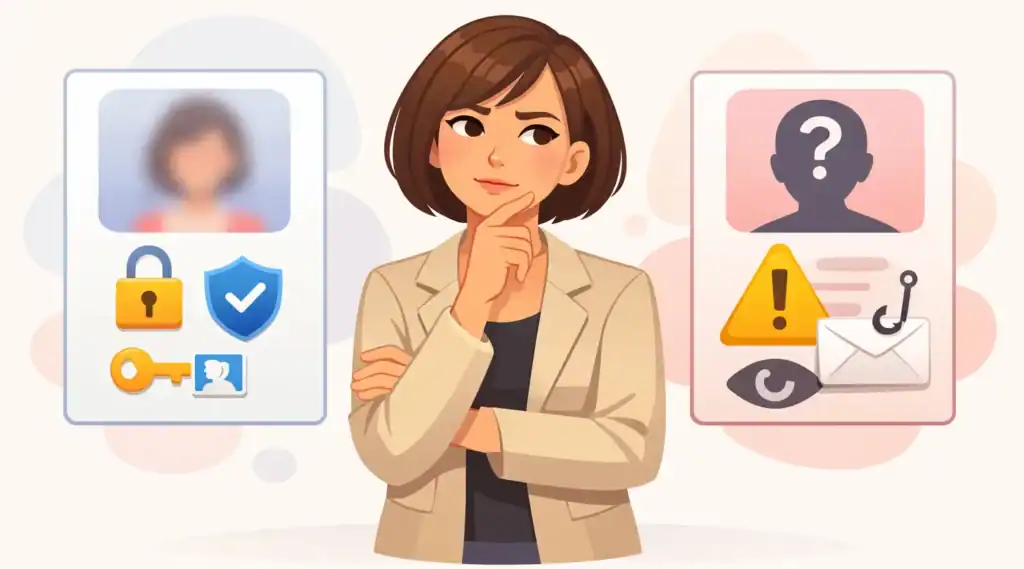
The verification system is similar to what most major dating platforms use now. Ashley Madison offers selfie-based verification handled by an independent third-party service that stores your biometric data for up to 12 months. Verified profiles get a blue Trust & Safety badge, and the platform says they get preferred visibility. Nothing groundbreaking on its own, but for a site that once had the worst data breach in dating history, the fact that they’re investing in third-party verification at all says something about how seriously they’re trying to rebuild trust.
Profile setup asks for a “Greeting” (a short opener others see before messaging you), an About Me section, and physical descriptors. It also asks your relationship status, with “attached” and “single” as clear options. Most profiles I saw on the Discover page were sparse on text but upfront about intentions, which is honestly more useful on a platform like this than a wall of carefully worded prompts. You know what people are there for.
There’s also one Ashley Madison-specific detail worth knowing about messaging costs. Once you’ve initiated contact with someone and they reply, ongoing non-priority messages in that conversation are free if you have the Message Plus feature active (included free for 30 days with any credit purchase, then $29.99/month). That means the expensive part is getting the first real response, not maintaining the conversation afterward. If your problem is opening lots of cold conversations, credits burn fast. If your problem is finding one or two real people and staying in the conversation, the cost pressure drops after the hardest part.
Where Ashley Madison Falls Short
💰 What men actually pay on Ashley Madison (2026)
Ashley Madison sells credits two ways. The cheaper option includes a Preferred subscription trial that renews at $32.99/month if not canceled. Women use the platform for free.
| Package | With Preferred Trial | Credits Only |
|---|---|---|
| 100 credits | $59 | $79 |
| 500 credits | $169 | $224 |
| 1,000 credits | $289 | $374 |
Reading an incoming Collect Message costs about 5 credits. Replying costs another 5 to 9 on top of that, so expect roughly 10 to 14 credits for one exchange. After that first reply, ongoing messages in that conversation become free if Message Plus is active (free for 30 days with any credit purchase, then $29.99/month). Without it, messages keep costing credits.
Prices shown are approximate and based on publicly available data as of March 2026. Ashley Madison’s pricing varies by region and may change with promotions. Always check the current pricing on ashleymadison.com before purchasing.
Compare that to Match.com or eHarmony where a monthly subscription gets you unlimited messaging, and Ashley Madison’s cost per conversation looks steep. The layers make it worse. Preferred, Message Plus, and credits all bill separately, and some of them get bundled into your first purchase as free trials that auto-renew if you don’t cancel
⚠️ What to watch for on Ashley Madison
These patterns show up across user reviews and during registration. They don’t mean the site is unusable, but they’re worth knowing before you spend.
During sign-up, the “Contact Potential Matches for Me” checkbox comes pre-selected, which means the platform sends automated outreach on your behalf. This is the main reason new users get flooded with messages that lead nowhere.
The Discover page shows profiles with tags like “Flexible,” “Curious,” and “Adventurous,” but limited bio content, making it hard to distinguish active users from dormant ones
New profiles go through a review period of up to 24 to 48 hours before messaging is enabled, during which you can browse but not interact
The gender imbalance is real: significantly more men than women, which means men are competing for attention and paying credits for every attempt
That pre-selected automated outreach checkbox is worth emphasizing because it explains a pattern that confuses almost every new male user. You sign up, and messages appear in your inbox almost immediately. Some of those are from the platform’s automated system reaching out on behalf of other users, not necessarily from people who actively chose to message you. When you spend credits to read and reply to those messages, some of them go nowhere.
This is a current opt-in feature that Ashley Madison offers during registration, and it’s separate from the historical fake “engager profiles” that the FTC found during its 2015 investigation. The platform no longer uses those, but the automated matching feature creates a similar feeling for men on the receiving end.
Ashley Madison for Different Relationship Goals
Discreet affairs (the original use case): This is where Ashley Madison still makes the most sense. The privacy tools are built specifically for people who need their dating activity to stay hidden. It works when you’re willing to spend on credits to have real conversations and you’re comfortable with a more guarded atmosphere than what you’d find on a mainstream app. It fails when you expect the credit investment to consistently lead to meetings, or when the people in your area just aren’t active enough on the platform to justify the cost.
Casual hookups: Ashley Madison can work for casual encounters, but apps like Tinder are cheaper and faster for this. It works when discretion matters more than speed. It fails when you’re single with nothing to hide and just want to meet someone tonight, because the credit cost and profile review delay slow everything down.
Open relationships and non-monogamy: This is an underrated use case, and the 2026 rebrand leans into it. The platform doesn’t judge relationship status, profiles clearly state whether someone is attached or single, and the privacy features protect everyone involved. It works when both partners are aware and the goal is connecting with like-minded people discreetly. It fails when you’re looking for a community or ongoing connection, because Ashley Madison is transactional by design. If you want a space that’s openly built around non-monogamy rather than wrapped in secrecy, Feeld is a better option.
Is Ashley Madison Worth the Cost?
This is the section of any Ashley Madison review that matters most, because the pricing model is unlike anything on Tinder, Bumble, or Hinge. Ashley Madison credits are the currency of the platform, and everything costs them.
For women, the economics are completely different. The platform is designed to be free for women as a way to keep the gender balance closer to even. If discretion interests you and you’re a woman, there’s very little reason not to try it.
For men, it depends on your budget and what you’re trying to solve. If your problem is finding people who understand discretion and won’t ask questions about your situation, Ashley Madison solves that. If your problem is cost-per-conversation, Ashley Madison is one of the most expensive ways to meet someone online. A hundred credits sounds like a lot until you realize that a few days of active messaging can burn through the entire balance. The Message Plus feature eases the pressure once conversations are established, but the initial cost of getting there is where most of the money goes.

For context, OkCupid Premium costs a fraction of that and includes unlimited messaging. The difference is that OkCupid doesn’t offer anonymous profiles, disguised photos, or discreet billing.
If discretion is worth paying a premium for, the money makes sense. If you’re just looking for casual dates and don’t need the privacy layer, you’re overpaying.
Ashley Madison Compared to Alternatives
Victoria Milan: Also built for discreet dating, but uses a subscription model instead of credits. The user base is smaller, especially in the US. If Ashley Madison’s credit system frustrates you but you need the same kind of privacy-first platform, Victoria Milan is the closest alternative. It also offers approximate locations, photo anonymizer tools, and private key access for protected photos, so the privacy experience is similar.
We compared both platforms side by side in our Ashley Madison vs Victoria Milan breakdown.
Tinder / Bumble: Cheaper, faster, way more users. But zero discretion features. Your profile is visible, your name is visible, and there’s no disguised photo option. If you need privacy, these apps can’t give it to you.
Feeld: If you’re here because you want non-monogamy, poly dating, or open relationship connections without the secrecy-first atmosphere, Feeld makes more sense. It openly supports different desires and relationship structures, and the tone is openness rather than hiding. Feeld is less private than Ashley Madison, but much better when the goal is being upfront about unconventional dating rather than keeping it invisible.
Common Myths About Ashley Madison
“It’s all fake profiles and bots.” Not entirely true, but not entirely wrong either. The platform’s “Contact Potential Matches for Me” feature generates automated messages that look like real interest. Third-party scammers also operate on the platform, especially accounts that immediately push you toward WhatsApp or Telegram. But the core user base includes real people with verified profiles. The problem is that the credit system makes it expensive to figure out who’s real and who isn’t, and you’re spending money at the exact moment you’re most likely to be wrong about that.
“It’s not safe after the hack.” Ashley Madison’s security in 2015 was genuinely terrible. The breach exposed 30 million users, and the company’s parent paid an $11.2 million class-action settlement and settled separately with the FTC over deceptive security practices. Since then, the platform has added encryption, two-factor authentication, a bug bounty program, NIST-aligned cybersecurity standards, and selfie-based identity verification stored by a third-party service. It is a meaningfully different platform from a security standpoint. That said, no platform is completely risk-free, and when an app’s entire pitch is privacy, the history of a breach that massive never fully goes away.
“It’s only for cheating.” The platform started that way, and the old tagline was explicit about it. But any honest Ashley Madison review in 2026 has to acknowledge that the user base has shifted. The company says 57% of new sign-ups are single. The user base includes people in open relationships, separated people, divorced people, and anyone who simply wants their dating activity to stay private. The sign-up process asks your relationship status and what you’re looking for. It’s broader than its reputation suggests, and the February 2026 rebrand is the company’s clearest acknowledgment of that shift.
“Paying means the profiles are real.” Not automatically. The credit barrier does filter out some junk because there’s a cost to being there, but Ashley Madison’s own public reviews are full of people arguing over whether that barrier helped enough. Money filters some behavior. It doesn’t produce trust on its own.
When to Delete Ashley Madison and Move On
If you’ve spent $150 or more on credits without a single real conversation that went anywhere, the people on the platform in your area probably aren’t active enough to justify the cost. Ashley Madison’s credit system rewards patience and selective messaging, but there’s a point where the math stops working.
If you find yourself spending credits on messages that immediately redirect you to WhatsApp or Telegram, you’re mostly hitting scammers, and that’s a sign the platform isn’t moderating well enough in your area. Cut your losses.
If your profile has been active for a month and the only messages in your inbox are the ones the platform generated through the automated matching feature, the real user activity around you is too low. Switch to a platform with more people.
And if the privacy tension makes you so cautious that you never actually use the platform normally, that counts as failure. At some point you’re not protecting your privacy, you’re paying to sit in hesitation.
Final Verdict on Ashley Madison
To close out this Ashley Madison review: the platform is legitimate and it does one thing no mainstream app does. It lets people date with genuine privacy. The disguised photos, anonymous billing, Stealth Mode, and identity verification make it the most privacy-focused dating service available in 2026.
For women, it’s free and functional. For men, it’s expensive and requires careful spending to get value out of the credit system. The 2015 breach is over a decade old now, and the current security setup is credibly stronger. At this point, safety and legitimacy aren’t the real concerns. The real concern is whether the cost of every conversation is worth it for what you’re looking for, and only you know the answer to that.
If you need discretion, Ashley Madison is the obvious choice. If you don’t need discretion, almost any other app will give you more for less.