Dating app burnout usually comes from over-swiping, unclear intentions, and emotional over-investment.
You can reduce burnout by:
- Limiting daily swipe time (15–20 minutes max)
- Being selective instead of mass-swiping
- Ending conversations early if interest is low
- Taking intentional breaks instead of “forcing it”
This guide explains how to use dating apps without burnout, ghosting, or wasted time ,realistically.
Dating apps are supposed to be the easy way to meet someone, right? But for a lot of us, it feels more like a part-time job that leaves us drained, cynical, and just plain over it. If you’ve ever felt stuck in a loop of swiping, small talk, and then sudden silence, you’re definitely not alone.
In fact, a 2024 Forbes Health/OnePoll survey found that a whopping 78% of users feel exhausted from online dating. That feeling has a name: dating app burnout.
This guide isn’t about vague tips like “be yourself” or “just have fun.” We’re going to look at why these apps can feel so exhausting and give you a clear plan to use them more intentionally. The goal is to protect your time, your energy, and your peace of mind.
A big part of avoiding dating app burnout is understanding which behaviors actually improve results. We analyzed 1,000 real Tinder profiles to see how selectivity, match rates, and swiping patterns play out in practice. Read the full study here.
Table of Contents
How this guide fits into the bigger picture
This guide is for people who:
- Feel drained or cynical after using dating apps
- Get ghosted repeatedly
- Spend time chatting without meeting
- Want results without emotional burnout
For a deeper explanation of how algorithms, visibility, and paid features shape these experiences, see our guide on how dating apps actually work.
What are dating app burnout, ghosting, and wasted time?
Before you can tackle the problem, it helps to know what you’re actually dealing with. These aren’t just random frustrations; they’re common side effects of the modern dating scene.
Understanding dating app burnout
Dating app burnout is that feeling of being completely drained by the constant, repetitive, and often unrewarding cycle of online dating. It’s when the excitement of a new match gets replaced with a sense of dread.
Common signs include feeling cynical about every profile, feeling detached from the whole process, and basically having to force yourself to open the app. And it’s not just you. The exhaustion is widespread, with 79% of Gen Z and 80% of Millennials saying they’ve been there.
The reality of ghosting
Ghosting is when someone you’re talking to just disappears, cutting off all communication without a word. It’s the digital silent treatment, and it’s become incredibly common in the low-stakes world of dating apps.
And it really does a number on you. When someone ghosts you, it can leave you feeling confused, anxious, and wondering what you did wrong. Psychologists say it chips away at our basic needs for social connection and agency, making the dating world feel unpredictable. This isn’t a rare thing either, with 41% of users report being ghosted, making it a huge source of dating anxiety.
Why dating apps can feel like wasted time
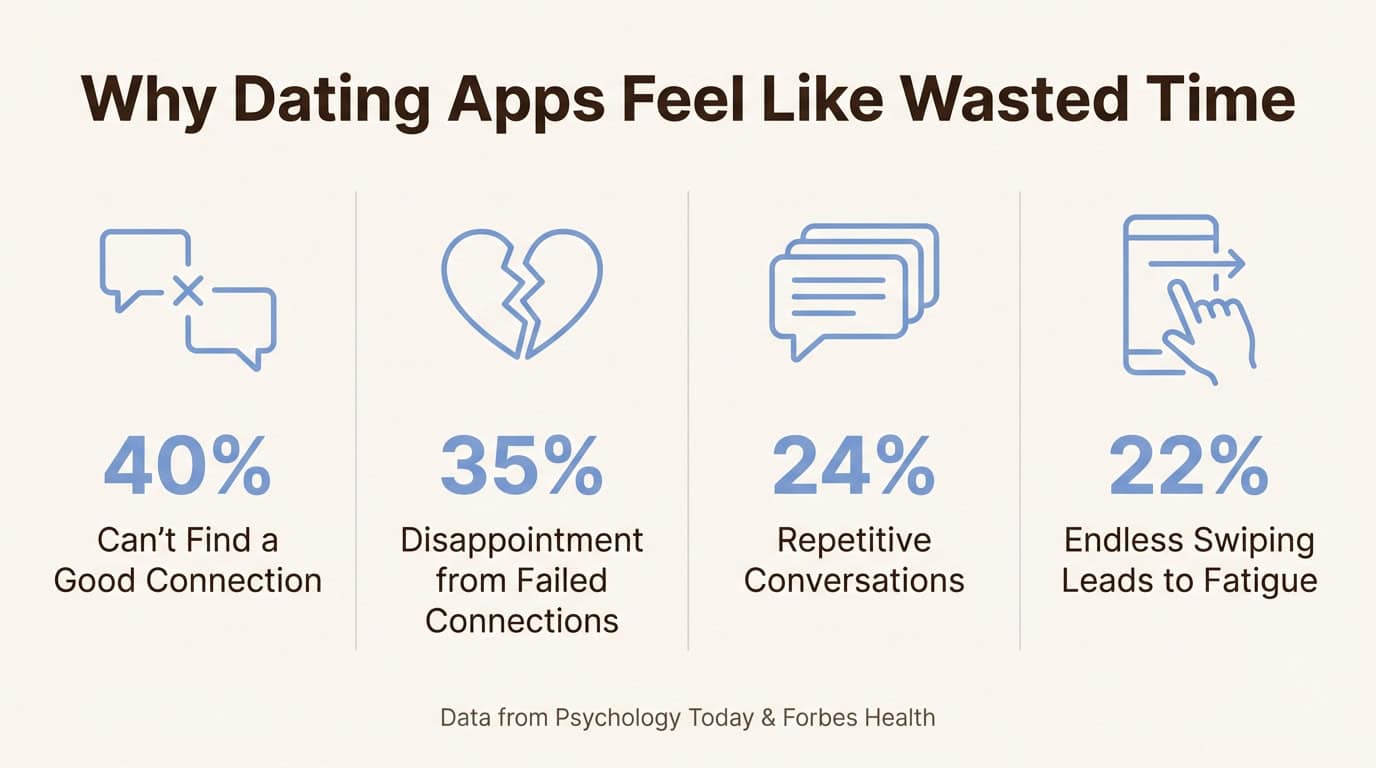
That feeling of spinning your wheels is one of the biggest reasons for burnout. It’s not just in your head; surveys show this feeling comes from a few specific problems:
- Can’t find a good connection: This is the top reason for fatigue, with 40% of users saying they just can’t find someone they click with.
- Disappointment from failed connections: For 35% of users, the emotional energy spent on chats that go nowhere is a major source of frustration.
- Repetitive conversations: Having the same “Hey, how’s your week?” conversation over and over is draining for 24% of daters.
- Endless swiping: The sheer volume of profiles leads to “swipe fatigue,” which adds to the exhaustion for 22% of users.
The psychology behind dating app fatigue
The burnout you’re feeling isn’t a personal failure. It’s often a direct result of how these apps are built. They’re designed to keep you swiping, not necessarily to help you find a lasting connection. Here’s a look at the psychology behind it all.
The “paradox of choice” and decision fatigue
Ever spent 20 minutes scrolling through Netflix only to give up and watch nothing? That’s the paradox of choice. It’s a concept from psychologist Barry Schwartz, and it’s the idea that having too many options can lead to anxiety and less satisfaction with your pick.
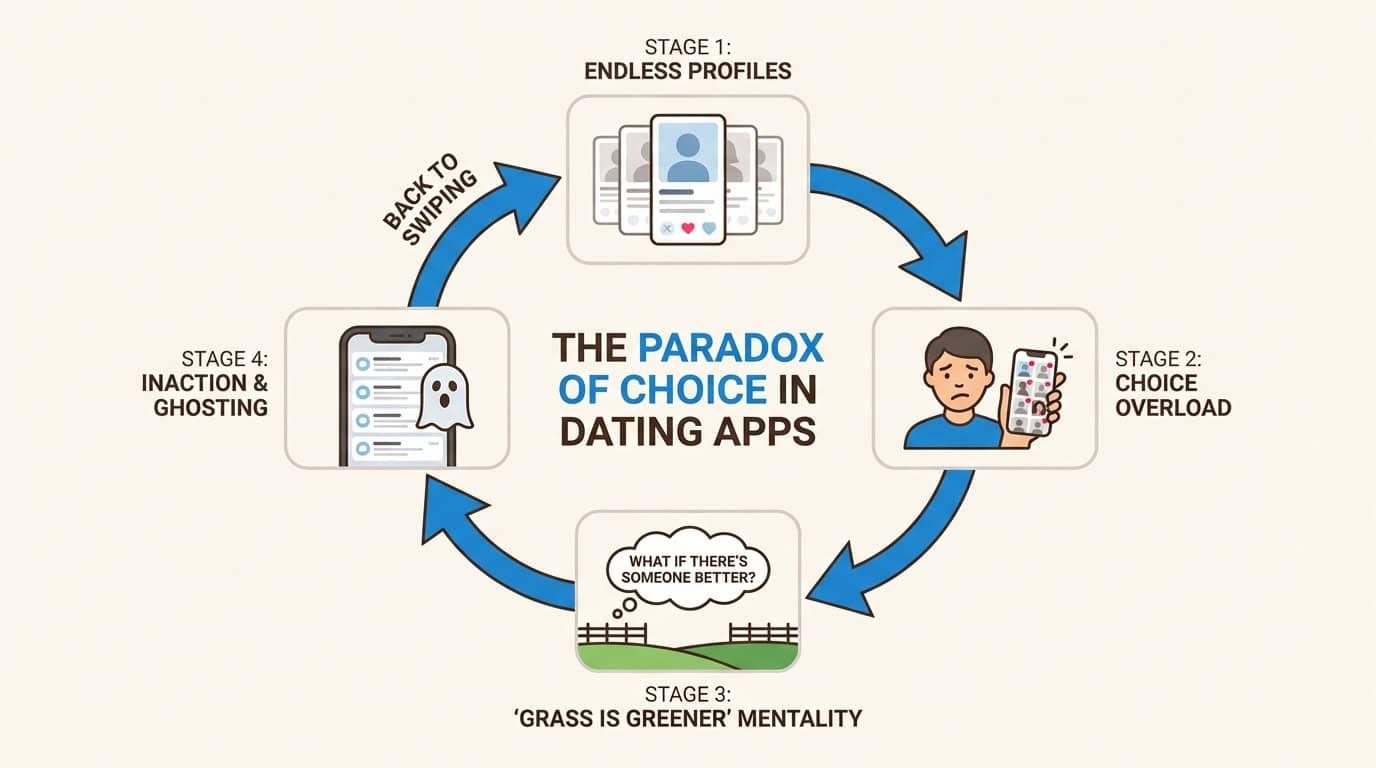
Dating apps are the ultimate paradox of choice. The endless stream of profiles can trigger what psychologist Dr. Katiah Llerena calls “choice overload.” It creates a “grass is always greener” mentality, making it hard to commit to one conversation because you’re worried a “better” match is just a swipe away. This cycle often ends in either a bunch of short-lived chats or just giving up entirely. To better visualize this, here’s how the paradox of choice creates a frustrating loop.
Gamification and the dopamine loop
A lot of dating apps are designed more like a slot machine than a matchmaking service. The swiping, the random notifications when you get a match, it’s all part of a game designed to keep you hooked.
This system is built on something called variable rewards. The unpredictability of getting a match creates a dopamine loop in your brain, the same chemical response you get from gambling. As behavioral psychologists have pointed out, this design mimics slot machine mechanics, encouraging you to keep swiping out of boredom or habit, not because you’re actually looking for someone.
Misaligned expectations vs. reality
Dating apps promise a simple way to connect, but the reality is usually a lot messier. The experience is often full of low-effort messages, misleading profiles, and even scams. This gap between the fantasy and what you actually get is a huge source of cynicism.
Understanding this disconnect matters. Dating platforms often sell an optimistic story, but the day-to-day experience can feel very different. A more realistic approach is learning how these systems actually work — including how algorithms, visibility, and safety tools shape what you see and who sees you.
That broader context helps explain why the cycle repeats: endless profiles lead to decision fatigue, which lowers satisfaction and fuels the constant feeling that someone better might be one swipe away. Over time, that dynamic often results in ghosting, stalled conversations, or disengagement — and the loop starts again.
Practical strategies for a better experience
Okay, so the apps are designed to be a bit of a trap. The good news is you don’t have to fall into it. By shifting your approach from just swiping to being more intentional, you can take back control.
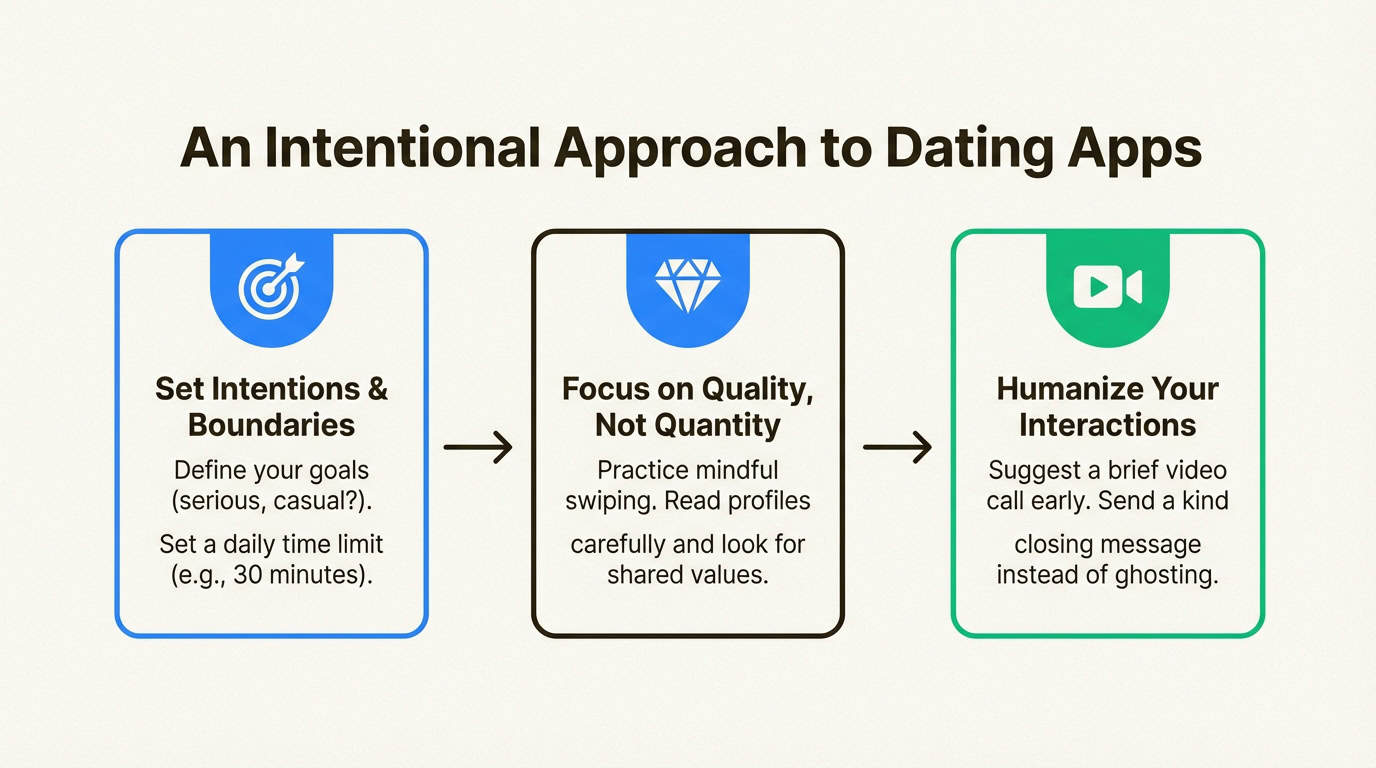
Set clear intentions and boundaries
Before you even open the app, take a minute to ask yourself why you’re using it. Are you looking for a long-term partner, a casual date, or just seeing what’s out there? As experts recommend, knowing your motivation helps refocus your approach so your actions line up with your goals.
Next, set strict time limits. Instead of letting swiping bleed into every spare moment, treat it like a specific task. Experts like Dr. Rufus Tony Spann suggest capping your daily use at around 30 minutes at a time. This keeps dating from feeling like a second job. Dr. Sabrina Romanoff takes this a step further, advising that you “swipe on schedule” to break the habit of swiping out of boredom.
Shift your focus from quantity to quality
The goal isn’t to collect the most matches; it’s to find a real connection. To do that, you need to be more selective. Practice mindful swiping: slow down, actually read the profiles, and look for real conversation starters or shared values instead of just reacting to photos.
This approach is sometimes called “satisficing,” aiming for good enough rather than perfect. It helps you filter out people who aren’t serious and cuts down on the number of dead-end conversations that drain your energy.
Humanize your interactions and exits
A profile isn’t a person. To build a real connection, you have to move beyond the app. Suggesting a quick phone or video call early on can help you foster an authentic connection and see if there’s actual chemistry before you invest too much time.
And to fight the culture of ghosting, just decide not to be a part of it. If you’re not interested after a few messages, you can end the conversation with a simple, kind message. Something like, “It was nice chatting with you, but I don’t think we’re a match. I wish you the best of luck!” goes a long way in making the dating world a little more respectful for everyone.
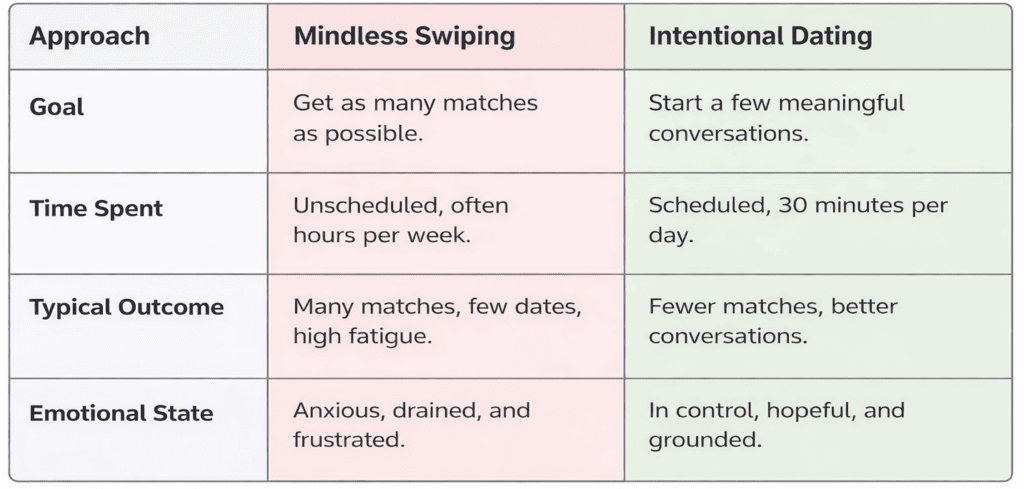
Protecting your time and self-worth
Navigating dating apps without getting worn down isn’t just about changing your swiping habits. It’s also about shifting your mindset so the ups and downs of it all don’t mess with your mental health.
Untangle your self-worth from app outcomes
This is the big one. A lack of matches, an unreturned message, or being ghosted is not a judgment on your worth as a person. It’s so easy to take these things as rejection, but they’re usually not about you at all.
As Dr. Sabrina Romanoff puts it, “It’s easy to read rejection into every silent swipe or missed connection, but that’s rarely the full story.” The other person could be busy, overwhelmed with their own matches, or just not active on the app anymore. Try to think of it as collecting data. Every interaction, good or bad, is just information that helps you clarify what you want.
Diversify how you meet people
Dating apps should be one tool in your toolbox, not your entire plan for meeting people. The more you rely on them, the more power they have over how you feel.
Invest time in real-life hobbies, social groups, and activities you actually enjoy. Dr. Romanoff recommends this because it not only makes you a more interesting person, but it also keeps you balanced and fulfilled outside of your dating life. When your happiness doesn’t depend on what’s happening on an app, you’re much less likely to get thrown off by the highs and lows.
Know when to take a break
Sometimes the best thing you can do is just delete the apps for a while. Taking a break isn’t a sign of failure; it’s a smart way to reclaim your mental peace and reset your perspective.
Stepping away can help you recharge and come back with a fresh outlook. And it’s a very common strategy. Research shows that 46% of singles have taken breaks from the apps, and of those, 64% said they returned with a much clearer idea of what they were looking for.
A more intentional approach to dating apps
Dating app burnout is a totally valid response to using systems that are often built for endless swiping, not real connection. The frustration, exhaustion, and cynicism you might be feeling are shared by millions of other people.
But the answer isn’t to swear off dating apps forever. It’s about changing your relationship with them. By being intentional with your time, setting clear boundaries, and protecting your self-worth, you can go from being a passive swiper to an active participant in your own dating life. This grounded approach lets you navigate online dating with more control and calm, making space for a real connection to finally happen.
Take control of your dating life
Dating apps aren’t simple tools, and the confusion many users feel is a rational response to how these platforms operate. Gaining a basic understanding of their mechanics—along with setting boundaries around how you use them can reduce frustration and help you make decisions more intentionally, whether that means continuing to use apps or stepping back from them altogether.
Frequently Asked Questions
What is the first step to avoid dating app burnout?
The first step is to set clear intentions. Before you start swiping, know what you’re looking for—whether it’s a serious relationship or casual dating. This helps you focus your energy and avoid conversations that don’t align with your goals.
Can you avoid burnout if dating apps are designed to be frustrating?
It’s definitely possible, but it requires a shift in mindset. While many apps use gamification that can lead to frustration, you can regain control by setting time limits, being selective with your swipes, and remembering that your self-worth isn’t tied to your match count.
What is the best advice for introverts on dating apps?
For introverts, quality over quantity is key. Focus on having a few meaningful conversations rather than collecting dozens of matches. Suggesting a brief video or phone call early on can also help you gauge chemistry without the pressure of a long, drawn-out texting phase.
What role do boundaries play in avoiding dating app fatigue?
Boundaries are essential. This includes setting strict time limits for app usage (like 30 minutes a day) and deciding not to engage in endless, low-effort chats. It also means protecting your peace by not participating in ghosting yourself; a simple, polite closing message is enough.
How can I find better matches to avoid wasting time?
Feeling like you’re not finding a good connection is a major cause of burnout. To combat this, focus on mindful swiping. Take the time to actually read profiles and look for shared interests or values, not just photos. This leads to fewer matches, but the ones you get will likely be higher quality.
How often should I take a break from dating apps?
Listen to your feelings. If you start to feel cynical, drained, or frustrated, that’s often a sign it’s time for a break. Many users describe this point as when dating apps start to feel more exhausting than useful. Taking time away—whether for a week or longer—can help you reset and regain perspective.