

If you’re reading a hinge review in 2026, you’re not here for a feature tour. You’re trying to figure out one thing: does Hinge still turn effort into real dates, or does it just give you matches that never turn into dates.
Hinge can work. But only under certain conditions.
It rewards profiles that invite replies, and it punishes thin markets. If your area doesn’t have enough active users, the whole thing slows down. Paying can help you get more looks and start more conversations, but it won’t rescue a profile that doesn’t pull replies, or a pool that’s too small, or goals that don’t line up.
So yeah. This is less “is Hinge good” and more “is Hinge good for you, where you live, with what you’re putting out.”
How this review works
This review shows what actually happens: how fast things move, whether conversations turn into dates, and when Hinge works vs when it wastes your time. Here’s our full review process: How We Review Dating Apps (2026): What Actually Matters
Is Hinge worth it
Hinge is worth it in 2026 if you want more intentional conversations and you can handle a slower pace to get them.
It’s not worth it if you need a lot of options fast, you like trying lots of people quickly, or your area just doesn’t have enough active users to keep the cycle alive.
Best for:
You want conversations with more to talk about, built around prompts and comments, not generic openers. You live in a larger or denser area where new options keep showing up. You’re tuning for real dates, not just collecting matches that don’t do anything.
Not for:
You want to move fast (match → chat → meet) and slow reply chains frustrate you. Your city is mid-sized and you keep seeing recycled profiles. Or it feels like the “best” people are locked behind Standouts and Roses and you don’t want to play that game.
This is where Hinge X comes in.
Hinge X is meant for people who already understand how Hinge works but feel like things move too slowly. Not because conversations are bad, but because not enough people are actually seeing them in the first place. Compared to Hinge+, it puts more weight on visibility and timing rather than new features.
Hinge says Hinge X gives you stronger recommendations, places your profile higher when people are browsing (“Skip the Line”), and keeps your likes closer to the top of someone’s incoming list for a while. What that really means is simple: your likes show up earlier, before they get buried under everyone else’s.
What it does not do is make people reply. It doesn’t improve your prompts, your photos, or your appeal. It just gets you in front of more eyes, faster.
That difference matters. If people usually respond once they see you, Hinge X can shorten the wait and help things move along. If people already see you and don’t reply, Hinge X won’t change the outcome. You’ll just find that out sooner.
On Hinge, your prompts aren’t decoration they’re the product people react to.
What you’re really spending on Hinge
Because the app is built around responding to what people actually wrote, Hinge quietly pushes you into spending more effort per Like and more thought per interaction. That’s useful when your goal is substance. It becomes a liability just as quickly.
When your local pool is healthy, that added effort returns something tangible. You see fewer dead openers, fewer endless “hey” exchanges, and a clearer signal of what people engage with once they do respond. In that environment, paying can be rational. Hinge+ sits at roughly $30 per month, mainly lifting Like limits and adding basic filtering. Hinge X is closer to $50 per month, and its value only appears if visibility is the constraint—priority Likes, faster circulation, and quicker feedback on whether your profile converts when it’s actually seen.

When your local pool is thin, the math flips. You’re investing more energy into each interaction while receiving fewer fresh attempts in return, and pricing only sharpens that imbalance. Paying doesn’t expand the pool. It lets you work the same limited set of profiles more aggressively. Over time, that effort compounds without producing better outcomes.
In mid-sized cities where the same profiles resurface again and again, Hinge’s slower turnover becomes the limiting factor. At that point, the issue isn’t your openers, your writing, or your tier. It’s simple supply. You don’t need better conversations. You need more viable options.
That dynamic repeats itself throughout this hinge review.
Hinge X decision context
Hinge X makes sense when replies are not the problem. If people engage once they see you, but exposure feels delayed or inconsistent, priority Likes can shorten the feedback loop and surface whether your profile works under normal conditions.
Hinge X breaks down when saturation is already visible. If you’re cycling the same profiles, replies are rare, or your city’s pool is shallow, additional visibility only accelerates repetition without changing results.
Where Hinge wins
Hinge still wins when you care about context.
You’re rarely starting from zero. You’re responding to one specific detail, which makes it easier to be real and easier for the other person to answer like a normal human.
“Most Compatible” helps too. It puts one strong pick at the top of your Discover feed when available and pushes you to act before it expires.
Some people also do better on Hinge because the app forces them to write a better profile. Prompt Feedback exists for a reason as prompt quality actually matters here.

One very 2026 thing: a lot of prompts now sound AI-written. Same clever format, same polished tone, same nothing. People are using AI more than ever to help with dating, and the result is that sounding perfect no longer stands out.
The new premium is sounding like a real person. Specific details. Slightly imperfect phrasing. Something you could actually say out loud.
Where Hinge loses
The same things that make Hinge good can also make it feel dead.
Writing fatigue is the big one. When prompts are the whole product, you either enjoy commenting or it starts feeling like work. That’s usually when momentum dies.
Pool depth is the second issue. In smaller cities, Hinge runs out of realistic matches faster. Every stalled chat matters more, and you feel the lack of dates more sharply.
If you are interested to read how does Hinge fare against Tinder you can read more here: Tinder Vs Hinge

Then there’s Standouts and Roses. Standouts is a separate feed where you can only send Roses, not Likes, and profiles there aren’t guaranteed to show up later in Discover. The result is that the best-looking slice of the pool starts to feel harder to access.
This is also why Hinge X can be appealing. If Standouts feels like the only place where anything is happening, paying for priority exposure can start to feel necessary rather than optional.
Another very “2026 Hinge” problem: inbox pressure. If you let too many chats sit where it’s your turn to reply, Hinge can block you from sending or accepting new Likes until you respond or close conversations. It’s the app forcing you to clean up your inbox before continuing.
Hinge also openly says that adding a comment when you Like someone makes it more likely to get a response. True — but it also means more effort. If you’re not commenting, you’ll often feel invisible.
Hinge for casual, serious, and everything in-between
For serious dating, Hinge works when you’re sending fewer, high-intent likes with comments that make replying easy. It fails when “serious” turns into endless talking and hesitation to meet.
For casual dating, it works when you’re direct about timing and vibe and use prompts to create low-friction invites. It fails when casual turns into thread hopping, because Hinge isn’t built for fast volume.
In mid-sized or niche markets, it works when you accept fewer total shots and focus on quality. It fails when Standouts becomes the only lane that feels alive and the app starts to feel like negotiating access instead of meeting people.
Is paying for Hinge worth it in 2026?
Paying is worth it when your bottleneck is being seen. In plain terms, you do fine once people actually see you, but the free version moves too slowly to create enough conversations.
Paying is not worth it when your profile doesn’t convert. People see you, but they don’t respond. Your prompts don’t land. Your photos don’t invite comments. In that case, more exposure just means faster rejection.
What you’re really buying is speed and visibility, not better matches.
When it’s time to stop trying to make Hinge work
If you’re getting conversations but not converting to real dates after repeated cycles, stop forcing it.
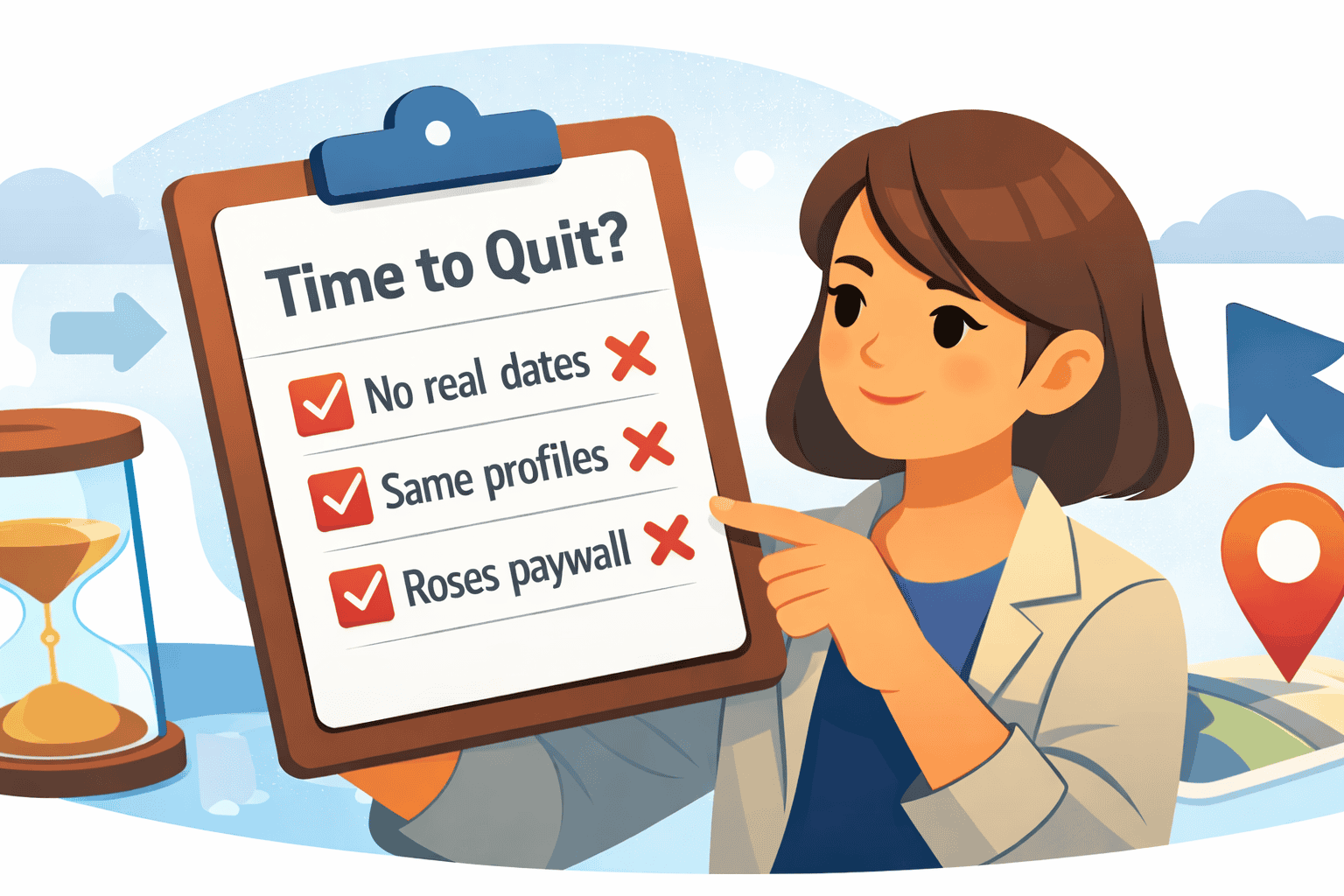
If you’re mostly seeing recycled profiles or you’re clearly in a thin pool, stop investing more effort per Like into a system that can’t give you enough new attempts.
If Standouts becomes the only lane that feels alive and you don’t want to participate in that dynamic, that’s your signal to switch and not to grind harder.
Final takeaway from this hinge review
Hinge is still one of the better mainstream apps for turning personality into conversation. It’s worth it when your area has enough people using it and your profile can reliably earn replies.
It’s not worth it when you need speed, you’re stuck with limited local options, or the app makes dating feel slow and full of dead ends
If you want fewer, clearer conversations that can turn into dates, Hinge fits.
If you want fast dates, pick a different tool.