how do dating apps and sites work?
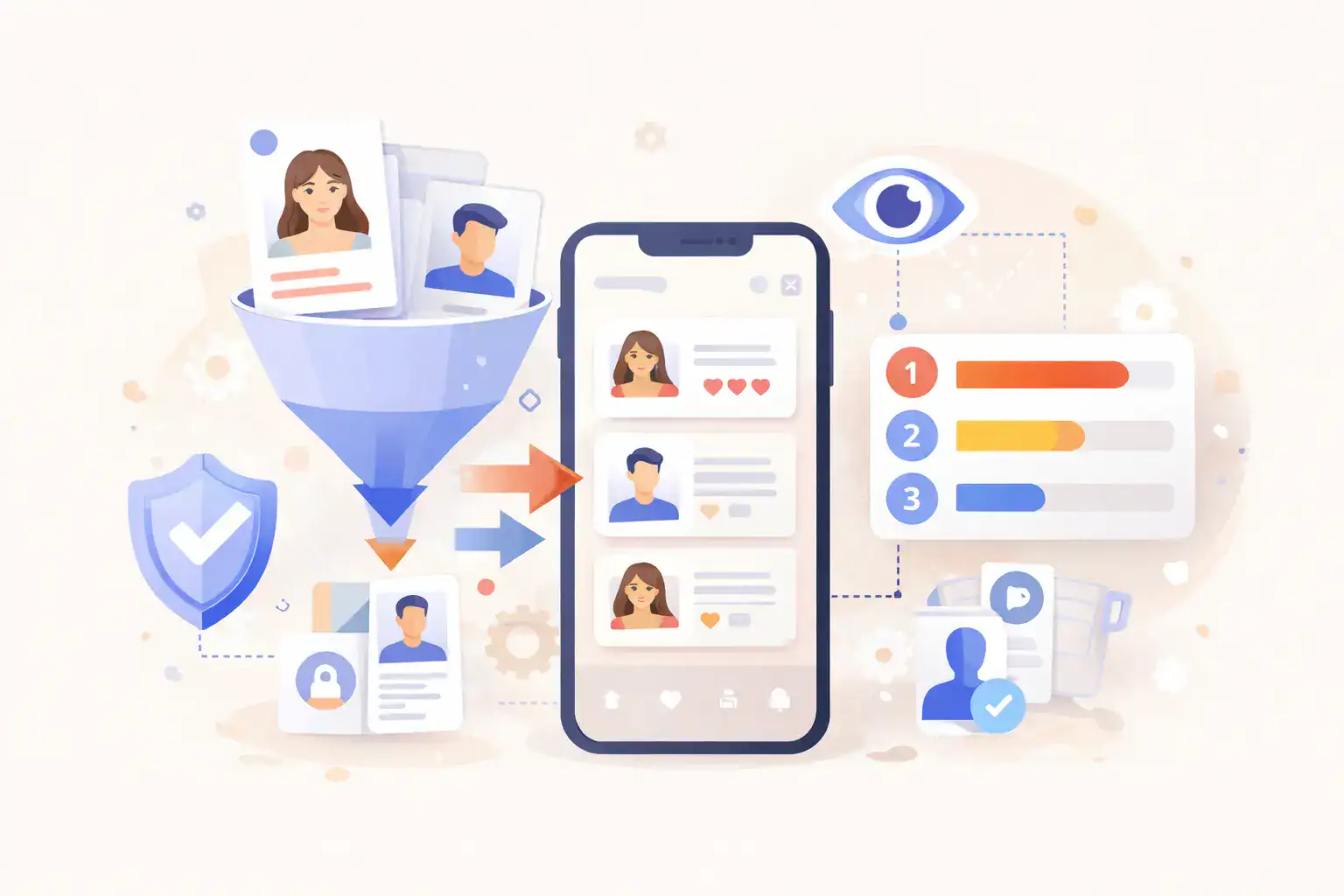
Dating apps work by ranking profiles using activity, engagement, and user behavior.
In simple terms:
- Your profile is shown more when people interact with it
- Inactivity lowers visibility
- Paid features increase exposure, not match quality
- Safety systems monitor behavior, not intentions
The sections below explain each part of how modern dating apps work, from matching and visibility to safety and paid features.
Table of Contents
What’s Really Going On Behind the Scenes of Dating Apps
This article explains how dating app algorithms, visibility, and safety systems actually work in 2026.
Dating apps can sometimes feel like a black box. You swipe, you match, or you don’t, and the logic behind it all isn’t always clear. This can lead to a lot of confusion and even burnout, with many people wondering if the system is stacked against them. The reality is that these platforms are a mix of your own behavior, some fairly complex recommendation systems, and their own business goals.
This guide is here to pull back the curtain. We’ll walk through the core mechanics of popular dating apps like Tinder and Hinge in a calm, objective way. You’ll get a better sense of how their matching systems work, why your profile’s visibility might change, what safety features are in place (and their limits), and how paid features can affect who sees your profile. The idea is to replace that uncertainty with clarity, so you can navigate online dating with more confidence and realistic expectations.
How matching systems on Tinder and Hinge work
At the core of any dating app is a system trying to predict compatibility and keep you engaged. While the technology is proprietary, most have moved past simple “desirability” scores. Today’s systems are more dynamic, focusing on your preferences and, more importantly, your actions within the app.
Tinder’s approach: Activity and proximity are key
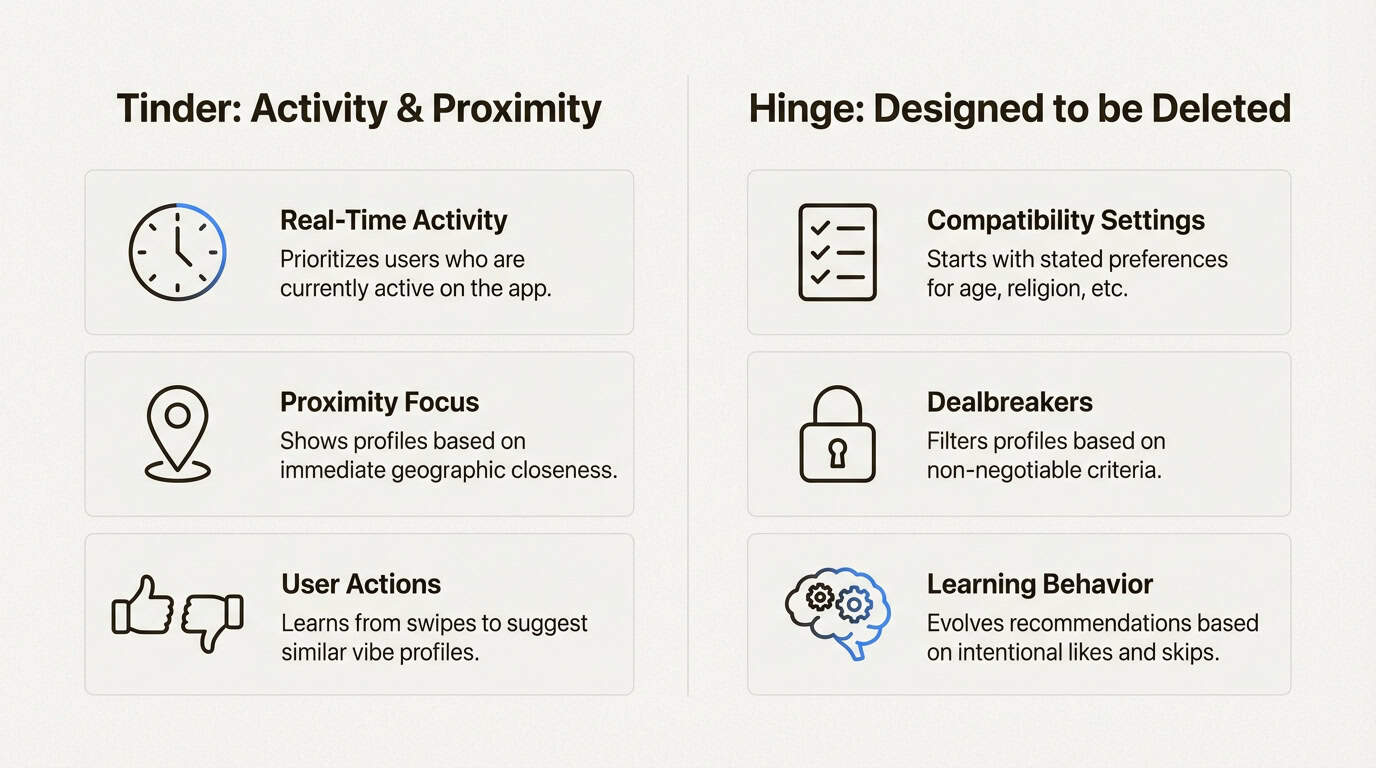
Tinder has publicly moved on from its old “Elo score.” Their current system is much more fluid and gives a significant edge to users who are active on the app at the same time. The biggest factor in their algorithm is simply how often you use the app. Beyond that, Tinder’s system looks at:
- Information you provide: This is the basic stuff: your age, distance settings, gender preferences, and any interests or details you add to your bio. Proximity is a huge factor, as the app is designed to show you people who are nearby.
- Your actions: The system pays attention to who you Like and Nope. It also uses anonymized details from photos to suggest profiles with similar vibes (like outdoorsy or festival-goer) to the ones you’ve liked before. This helps it learn your unspoken preferences.
- Engagement: The algorithm’s main job is to help people connect. It shows your profile more frequently when you’re active, which increases the odds of you matching and starting a conversation with someone else who is also online. According to Tinder, this is the most important part of their algorithm and it’s something you can directly control.
Hinge’s approach: The “designed to be deleted” system
Hinge promotes its service as being built on a Nobel-Prize-winning algorithm and a deep-learning recommendation system. The stated goal is to get you on good dates, not to keep you swiping forever. This system uses a few different factors to suggest people you might be compatible with:
- Compatibility settings: The system starts with your stated preferences for things like age, distance, and religion. If you pay for a subscription, you can add more specific preferences for height, politics, and family plans.
- Dealbreakers: These are the preferences you mark as non-negotiable. Hinge will only show you profiles that meet these criteria, and your profile will only be shown to people whose dealbreakers you meet. This helps narrow the focus to people who could be a good long-term fit.
- Past behavior: The system learns from every like and skip. Hinge suggests that being intentional with your likes, rather than swiping right on everyone or no one, helps evolve your recommendations over time.
Why your visibility changes with boosts and bans
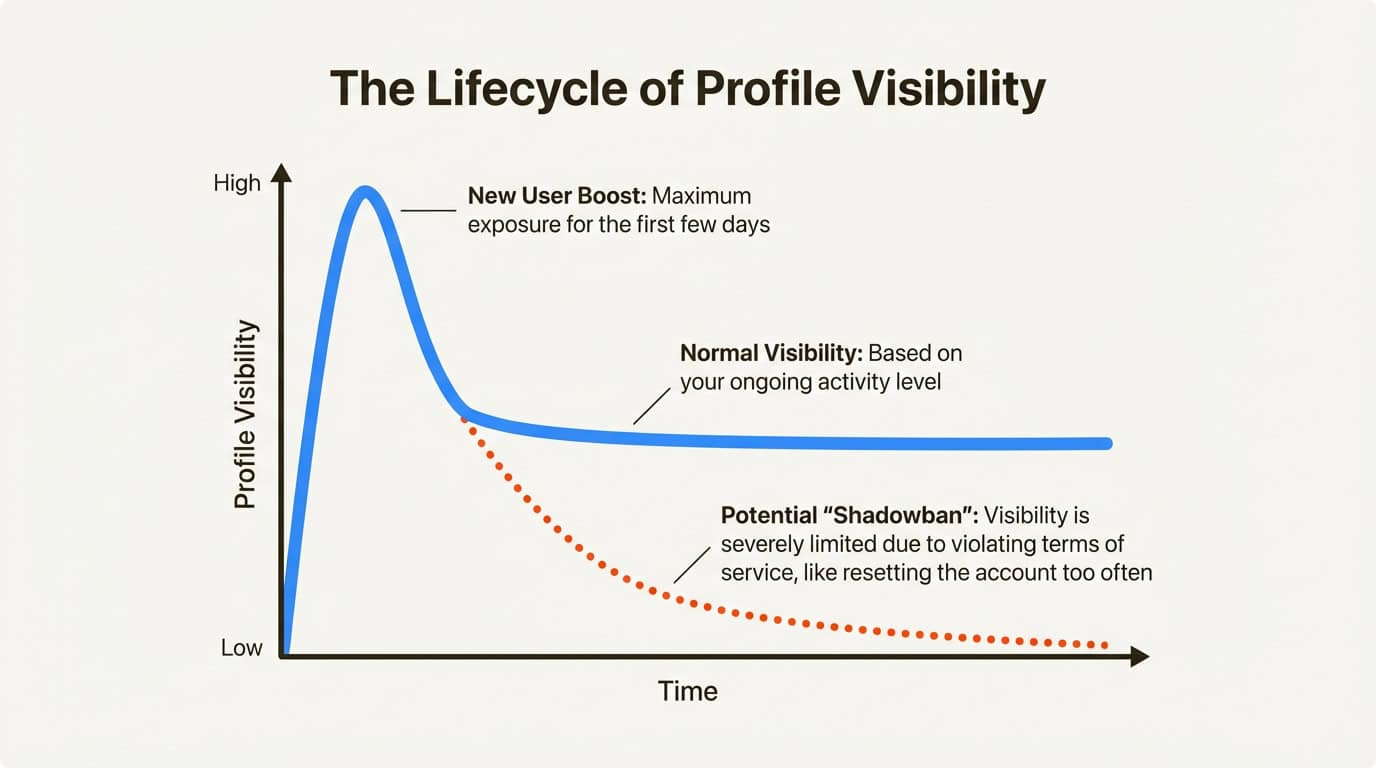
One of the most common frustrations with dating apps is the feeling that you’ve suddenly become invisible. Your matches might slow to a trickle, which has fueled the popular theory of the “shadowban.” In most cases, these changes in visibility are just a normal part of how the algorithm works.
The “new user boost” and the importance of activity
Most apps give new profiles a temporary but powerful boost in visibility. For the first few days, your profile is shown to a much wider audience. This serves two purposes: it helps the algorithm gather data on who is interested in you, and it gives you some early matches to encourage you to stick around. After this initial period, your visibility settles down to a normal level that’s based on how active you are. As Tinder has said, their main strategy is prioritizing active users, so if you don’t log in very often, your profile will naturally be shown less.
Understanding and avoiding a “shadowban”
While a secret, malicious ban is unlikely, your account can be flagged in a way that severely limits who sees it. This is usually triggered by behavior that violates the terms of service, like constantly deleting and recreating your account. Some people do this to try and get the “new user boost” again, but apps can detect this pattern. When they do, they might flag the account as a potential bot or spammer, causing its visibility to drop. Instead of trying to game the system, you’re better off focusing on building a solid, authentic profile.
The reality of safety systems
Dating platforms put a lot of resources into safety systems to protect their users, but these tools have both strengths and real limitations. Knowing how they work is an important part of having a safer online dating experience.
Core safety features
Most major dating apps use a multi-layered approach to safety that includes a few key features:
- Photo and ID verification: Many apps will ask you to take a selfie in real-time, often asking you to copy a specific pose. Facial recognition technology then compares this selfie to your profile photos. While this confirms that the person in the photos is the one using the account, it’s important to remember that it is not a background check. It doesn’t verify their name or check for a criminal record.
- Reporting and blocking tools: All mainstream apps have tools for reporting or blocking profiles that violate their rules, such as for harassment, spam, or fake photos. This flags the user for review by a mix of automated systems and human moderators.
- Content moderation: Apps use automated tech to scan messages and profiles for inappropriate language, explicit images, or suspicious links. According to Tinder’s privacy policy, when this kind of activity is detected, staff may review the content to decide on the right course of action.
Limitations and how to stay protected
While these tools are necessary, they aren’t perfect. Scammers are always looking for new ways to get around them.
- Systems are reactive, not proactive: Reporting systems are almost entirely reactive. Action is usually taken after someone has already had a bad experience and filed a report.
- Background checks are rare: Running criminal background checks is expensive and legally complicated, so most apps don’t do it. Verification confirms a person looks like their pictures, not that they are a good person or have a clean record.
- Data privacy risks: Dating apps collect a lot of sensitive personal information. It’s smart to be mindful of what you share, as data breaches can and do happen.
Understanding these limits is the first step toward dating more safely. For practical guides on how to spot romance scams and protect your information, you can explore the resources at TrustYourMatch.com.
The business model: How paid features influence your experience
Dating apps are businesses, and most of them use a “freemium” model. The basic service is free, but you can pay for subscriptions that promise to improve your experience. These paid features work directly with the algorithm by giving you more visibility and more information than free users get.
Bypassing the queue: Boosts and priority features
One-time purchases and subscription perks let you temporarily or consistently jump ahead of free users in the matching queue.
- Tinder’s Boost and Super Like: A Boost makes your profile one of the top profiles in your area for 30 minutes. A Super Like lets another user know you’re very interested and, according to Tinder, makes you 3x more likely to get a match.
- Hinge’s Roses and Priority Likes: A Rose sends your profile to the top of someone’s “Likes You” feed. Priority Likes, which are part of the HingeX subscription, keep your likes toward the top of other users’ feeds.
Unlocking features with premium subscriptions
Monthly subscriptions on apps like Tinder and Hinge bundle these boosts with other features that give you more information and control. Whether they’re worth the money really depends on how you use the app.
| Feature Group | Free User Experience | Paid Subscriber Experience (Examples) |
|---|---|---|
| Visibility | Standard visibility based on algorithm. | Tinder Platinum: Prioritized Likes are seen faster. HingeX: “Skip the Line” acts as an always-on boost. |
| Information | Can’t see who liked you until you swipe on them. | Tinder Gold: See a full list of who has already liked you. |
| Swiping | Limited number of right swipes per day. | Tinder Plus/Gold/Platinum & Hinge+/HingeX: Unlimited Likes. |
| Filtering | Basic filters like age and distance. | Hinge+ & HingeX: Advanced filters for height, politics, family plans, etc. |
| Location | Limited to your current geographic area. | Tinder Plus/Gold/Platinum: Passport™ feature to match with people anywhere in the world. |
What dating apps are good at vs. what they’re not
Dating apps are just tools, and like any tool, they have clear strengths and weaknesses. Having realistic expectations can help reduce frustration and make the whole experience better. Here’s a simple breakdown of where they tend to do well and where they fall short.
| What Dating Apps Are Good At | What They’re Not Good At |
|---|---|
| Providing Unprecedented Access: They offer a huge pool of potential partners, connecting you with people you likely would have never crossed paths with otherwise. | Encouraging Superficial Judgments: The fast-paced, swipe-based format often prioritizes quick decisions based on a few photos and a short bio. |
| Convenience and Efficiency: You can look at profiles and connect with people whenever you want, from wherever you are, which helps fit dating into a busy schedule. | Creating Decision Fatigue: The sheer number of choices and the repetitive nature of swiping can lead to emotional exhaustion and burnout. |
| Filtering by Basic Intent: They let you filter by key criteria like age and distance, which saves time by narrowing the field from the start. | Replacing Real-World Chemistry: An algorithm can try to predict compatibility, but it can’t replicate the subtle nuances of an in-person connection. |
| Lowering Social Barriers: They offer a lower-stakes way for people who are introverted or shy to start a conversation. | Aligning User and Business Goals: Apps succeed when you find a partner, but their business model depends on keeping you around as an active, and possibly paying, user. |
For a deeper visual dive into the technology that powers these platforms, the video below offers a clear explanation of the algorithms behind popular apps like Tinder and Bumble, reinforcing many of the concepts we’ve discussed.
This video explains the algorithms behind popular dating apps, reinforcing many of the concepts discussed in this guide.
Navigating with clarity
Dating apps aren’t mysterious forces of destiny; they are tech platforms built with specific rules and business goals. Their algorithms are designed to reward active users, their safety features provide a baseline of protection that still requires you to be careful, and their paid subscriptions are meant to sell you an advantage in visibility.
By understanding how these things work, you can shift from being a passive user to an informed one. You now know that a drop in matches is probably because your new-user boost expired, not because of some secret penalty. You know that a verified profile confirms a person looks like their photos, not that they’re a good person. And you can see that paid features are tools for getting more exposure, not a guarantee of finding a connection.
This knowledge gives you more control. It allows you to use these apps more intentionally, protect yourself more effectively, and go through the process with a little less anxiety.
To find the platform that best fits your goals, you can explore our honest, in-depth app reviews and comparisons to make a choice that feels right for you.