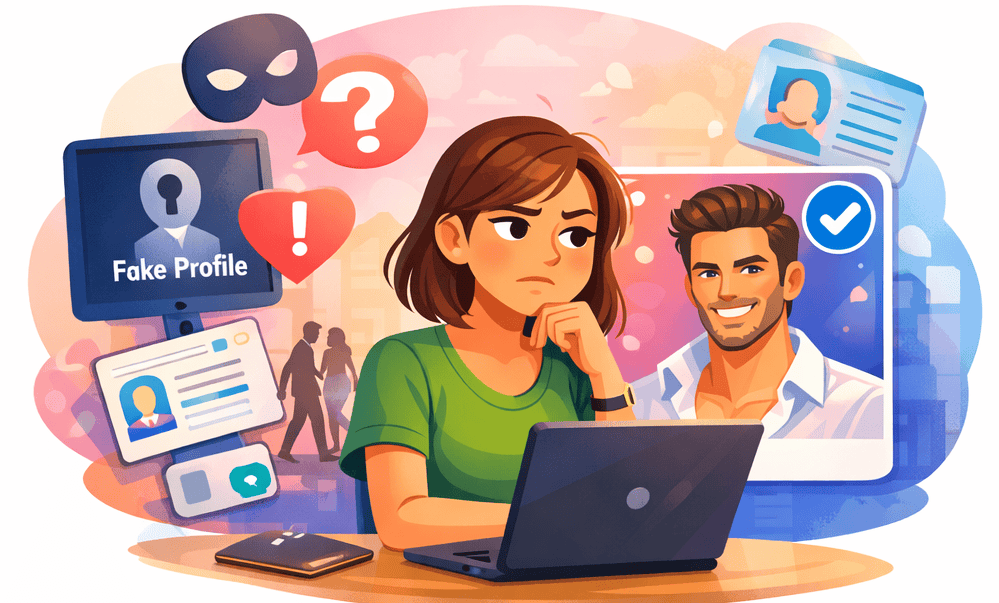
“Verified” doesn’t mean safe. It barely means real.
If you treat the verified badge on dating apps like a background check, you’re going to waste time, trust the wrong people, and ignore better warning signs. I’ve tested this across Tinder, Hinge, and Bumble. The blue check looks official. It feels reassuring. It mostly tells you one very specific thing and leaves everything else wide open.
So let’s answer the actual question: what does verified mean on dating apps? It depends on what kind of verification the app is using. And that distinction matters.
Most verified badges just mean photo match
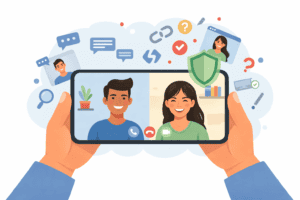
On most apps, verification is selfie-based. You hold up your phone, copy a pose, and the app compares that selfie to your profile photos.
That’s it.
- Tinder photo verification uses a real-time selfie compared against your existing photos [Tinder Help — https://www.help.tinder.com/hc/en-us/articles/360034941812-Photo-Verification].
- Bumble photo verification works the same way—submit a live selfie and match a pose [Bumble Help — https://bumble.com/en/help/how-does-photo-verification-work].
- Hinge selfie verification also compares a video selfie to your profile media [Hinge Help — https://help.hinge.co/hc/en-us/articles/10303221435539-What-is-Selfie-Verification].
So when you see a verified badge dating apps display, it usually means: the person in the photos submitted a live image that matches those photos.
What it doesn’t mean:
- They’re single.
- They’re honest.
- They’re who they say they are outside those photos.
- They’re safe.
It simply reduces the chance they stole someone else’s pictures.
That’s all.
Photo verification is not ID verification
People mix this up constantly.
Photo verification vs ID verification are two different levels. Most mainstream dating apps do not require government ID for basic verification. They rely on facial comparison tech. That confirms the account holder matches the photos, not that the name is real or tied to a legal identity.
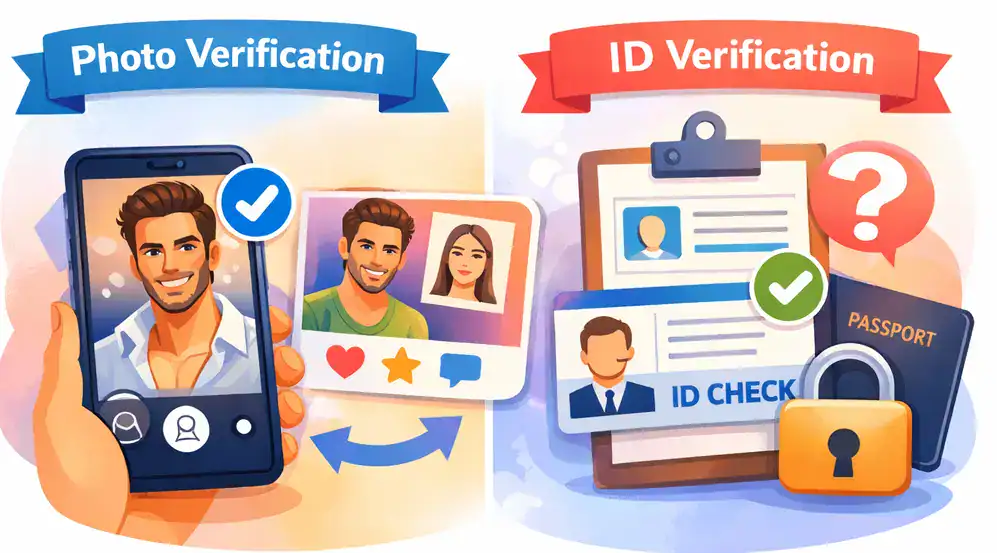
Some apps in certain regions will request ID for age checks or suspicious activity, but that’s separate from the standard badge you see next to someone’s name.
So when people ask “does verified mean real?” the honest answer is: photo-real, yes. Identity-real, not necessarily.
I’ve matched with verified users who were using a nickname, hiding their relationship status, or straight-up lying about their age. The badge didn’t catch that. It’s not built to.
Why apps push verification in the first place
When you open Tinder now, you’ll see prompts to verify. It increases your visibility. Tinder has publicly encouraged users to verify for more trust in matches
Tinder recently rolled out Face Check, which makes video selfie verification mandatory for new users in some regions. It’s a step up from the old optional system, but it still confirms the face matches the photos. Not the person’s intentions.
Here’s what you feel as a user:
- Verified profiles look more credible.
- You’re more likely to swipe right.
- You hesitate less before replying.
That behavior increases engagement. More matches. More messages. More time in the app.
And I’ve noticed something else: verified profiles often circulate more widely. Tinder has acknowledged that verified members may receive priority in certain contexts, like verified-only filters and boosted discoverability.
So verification isn’t just about trust. It affects profile circulation. The apps want more people verified because it keeps people interacting.
The common mistake: assuming verified means safe
I’ve done this. You probably have too.
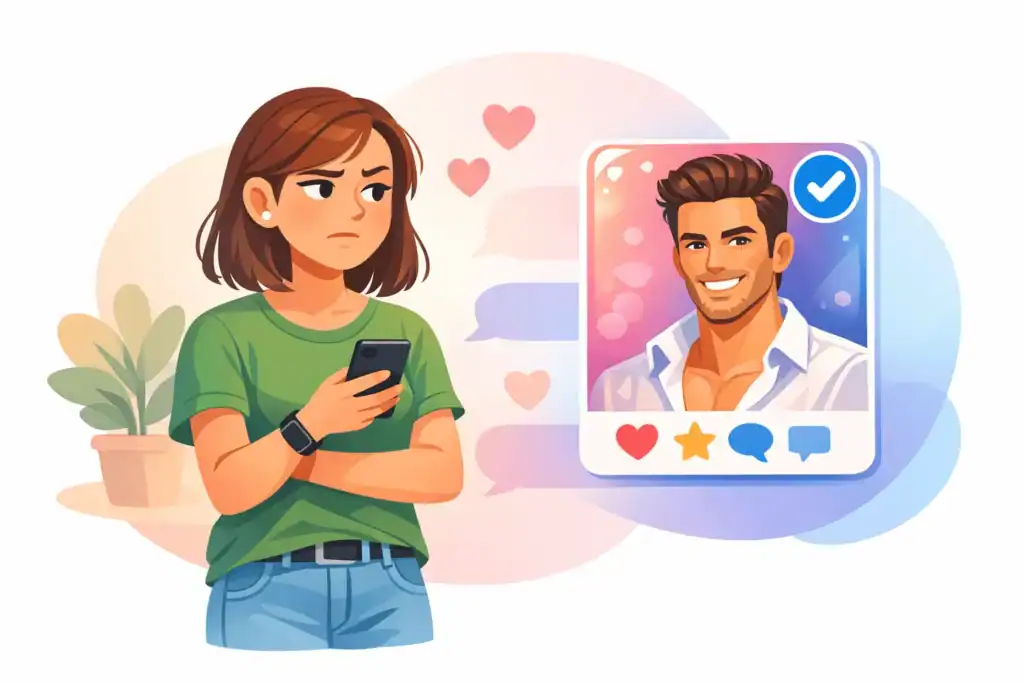
You see the badge and subconsciously lower your guard.
Then:
- You move off-platform faster.
- You send your number sooner.
- You skip basic vetting questions.
But if you’re wondering “does verified mean safe?”—no. It doesn’t screen for criminal history. It doesn’t check if the person has been reported on other apps. It doesn’t validate whether they’re emotionally stable. It doesn’t even confirm their job.
Selfie verification dating apps use prevents catfishing with stolen photos. It does nothing about manipulation, harassment, or deception once the photos are real.
Safety tools are separate. Reporting systems are separate. The badge is just photo confirmation.
Can someone fake photo verification?
Short answer: it’s harder, but not impossible.
Most platforms use liveness detection—meaning they try to prevent someone from holding up a still photo or using a deepfake in real time.
But people have:
- Uploaded real photos of themselves and later misrepresented who they are.
- Used significantly older photos and still passed.
- Had one person verify, then someone else run the account.
So if you’re asking, can someone fake photo verification? It’s uncommon with basic tricks, but the system isn’t magical. It checks the face at the moment of verification. It doesn’t monitor who’s typing to you at 11:30 p.m.
This is why verified doesn’t equal safe, and it doesn’t equal ongoing authenticity.
When verification actually matters
It matters most for filtering obvious fakes.
If you’re in a big city and half your likes are suspiciously perfect profiles, choosing to swipe mostly on verified users will lower the chance of bots and stolen photos. That’s practical.
It can also affect matching dynamics. On some apps, users can filter by verified-only profiles. If you’re not verified, you’re invisible in those searches.
So from a visibility standpoint, verification helps your account. From a trust standpoint, it’s minimal but useful.
What I personally use the badge for
I treat it as a first-pass filter. Nothing more.
If someone is verified:
- I assume their photos are them.
- I still watch how they communicate.
- I still delay moving off-app.
- I still reverse image search if something feels weird. Yes, I do that.
If they’re not verified, I don’t automatically swipe left. I just stay more alert.
Dating app verification explained simply: it confirms the face matches the pictures. It does not confirm the person matches the story.
That’s the difference most people miss.
Use the badge for what it was built for. Don’t give it more authority than it earned.